History
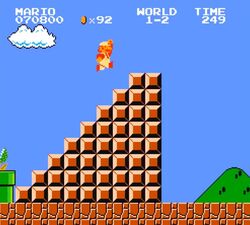
Very few video games have managed to stay popular for decades and be recognized across generations. Super Mario is one of the rare ones that has achieved this level of fame.
Almost everyone has heard of the cheerful Italian plumber in red overalls, even if they’ve never played one of his games. His story began in a much smaller role than the global icon he is today.
Mario’s first appearance was in the arcade classic Donkey Kong in 1981. Back then, he wasn’t even called Mario—he was introduced as Jumpman, a carpenter who had to climb ladders and dodge barrels to save a damsel in distress. That character eventually evolved into the Mario we know today.
From those early arcade days, Mario has starred in more than 200 video games, becoming one of the most recognizable and beloved characters in entertainment history. By the early 1990s, Mario wasn’t just saving princesses—he had become the face of Nintendo itself.
The beginnings of Nintendo
The story of Mario is closely tied to the history of Nintendo. The company was founded back in 1889 by Fusajiro Yamauchi as Nintendo Koppai (🔎 wiki), originally producing Japanese playing cards called “hanafuda.” For many years this was their main business.
When Fusajiro’s grandson Hiroshi Yamauchi took over in 1956, he began experimenting with different industries—from taxis to rice to hotels. Most of these didn’t succeed, but eventually Nintendo found its direction in the toy and entertainment market during the 1960s.
Inspired by the success of companies like Atari, Nintendo shifted its focus to video games. Their first console, the Color TV-Game, was launched in 1977 and sold over 3 million units. A few years later, however, Nintendo faced a setback when their arcade title Radar Scope failed to impress in the American market.
Determined to try again, Hiroshi Yamauchi asked young designer Shigeru Miyamoto to create a new game. The result was Donkey Kong in 1981, a massive success that introduced players to Jumpman—soon to be known as Mario.
1983 marked a turning point: Mario finally got his own starring role alongside his brother Luigi in the arcade game Mario Bros., this time reimagined as plumbers from New York.
The real breakthrough came a few years later with the launch of the Nintendo Entertainment System (NES) in 1986. Among its lineup of games was Super Mario Bros., a title that would forever change gaming history.
The evolution of Mario
Over the decades, Mario has appeared in countless games. While it’s impossible to list them all, here are a few that highlight his journey:
- Donkey Kong (1981, Arcade) – Mario’s first role as Jumpman, complete with his now-famous hat and mustache.
- Donkey Kong (Game & Watch, 1982) – A handheld version where players guided Mario upward through a fixed-screen adventure.
- Mario Bros. (Arcade, 1983) – The first game starring Mario and Luigi as plumbers battling creatures in the sewers.
- Mario is Missing! (1992, SNES) – An educational game where Luigi takes the spotlight while searching for his brother.
- Mario’s Tennis (1995, Virtual Boy) – One of the earliest Mario sports titles, bundled with Nintendo’s short-lived Virtual Boy system.
- Mario Kart: Double Dash (2003, GameCube) – A fan-favorite racing game that introduced two-character karts for the first time.
- Mario Kart Wii (2008, Wii) – Took advantage of motion controls with the Wii Wheel and introduced global online racing.
- Super Mario 3D Land (2011, 3DS) – Combined 2D and 3D platforming, becoming the fastest-selling handheld Mario game ever.
- Mario Tennis Open (2012, 3DS) – Expanded Mario’s sports legacy with multiplayer features over wireless connections.
Continuing Evolution
From platformers to sports, racing, RPGs, and even party games, Mario has explored nearly every gaming genre. Despite these changes, his iconic look and personality have stayed remarkably consistent for more than 30 years.
Mario remains the star of the best-selling video game franchise in history. While not every title is a masterpiece, his adventures are almost always met with praise, keeping him at the heart of gaming culture worldwide.